 Save Pin
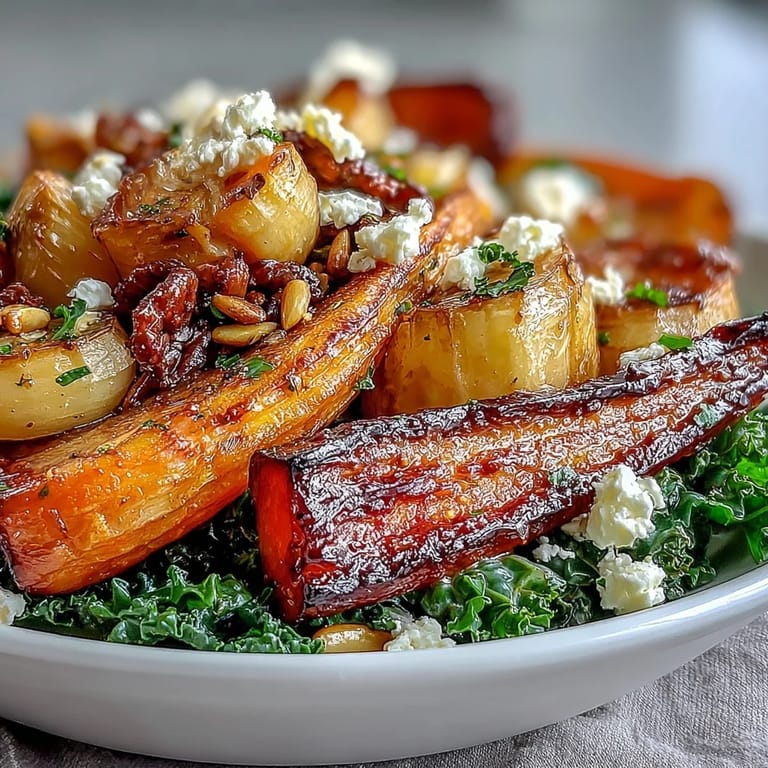
 Last November, I was standing in my kitchen on one of those gray afternoons when everything feels a little slower, and I realized I'd been eating the same tired salads for weeks. My farmer's market haul that Saturday had been all root vegetables—carrots, parsnips, a vivid golden beet—and instead of roasting them separately like I always did, I decided to build an entire warm bowl around them. The moment that first spoonful hit my mouth, with the caramelized vegetables still steaming and that tangy dressing cutting through everything, I understood why winter cooking deserved more respect. This bowl became my answer to those days when you need something that feels both comforting and alive.
I made this for my neighbor Sarah during that brutal cold snap in January, when I could see her breath in her kitchen because her heater was acting up. She'd been living on soup and toast for three days, and I showed up with this bowl still warm in a container. Watching her face when she tasted it—the way she closed her eyes and actually sat down at her table instead of eating standing up—that's when I knew this recipe was something special. The roasted beet had stained her fingers pink by the time she finished, and she laughed about it like it was the best part of her week.
Ingredients
- Carrots and parsnips: These two are the backbone of everything—carrots bring sweetness, parsnips add an almost nutty earthiness that deepens when roasted.
- Sweet potato: Don't skip this; it caramelizes beautifully and adds a subtle creaminess that makes the whole bowl feel more luxurious than it has any right to be.
- Beet: One small beet is enough to add color and that mineral-rich sweetness that makes people ask what that depth of flavor is.
- Olive oil and thyme: The oil helps everything brown and crisp; thyme whispers winter into the whole dish without shouting about it.
- Kale: Massaging it with oil beforehand matters more than you'd think—it softens the leaves and makes them actually pleasant to eat raw.
- Apple cider vinegar and Dijon mustard: The warm dressing hinges on these two; together they create a brightness that cuts through the richness of roasted vegetables.
- Pumpkin seeds and feta: These toppings aren't decoration—they're textural contrast and the moment when this stops being healthy and starts being genuinely delicious.
Tired of Takeout? 🥡
Get 10 meals you can make faster than delivery arrives. Seriously.
One email. No spam. Unsubscribe anytime.
Instructions
- Heat your oven and prep your vegetables:
- Get your oven to 425°F and line a baking sheet with parchment—this makes cleanup real later. While it heats, peel and chop your carrots, parsnips, sweet potato, and beet into roughly 1-inch pieces; they should be similar in size so they roast evenly.
- Season and roast:
- Toss your vegetables with 2 tablespoons olive oil, kosher salt, black pepper, and dried thyme in a large bowl until everything is coated. Spread them on your baking sheet in a single layer and roast for 30 to 35 minutes, stirring everything around the halfway point so the edges get caramelized and nothing burns.
- Soften the kale:
- While the vegetables roast, tear your kale into bite-sized pieces and place it in a bowl. Drizzle with 1 tablespoon of olive oil and a small pinch of salt, then massage it with your hands for about a minute—you'll feel it soften under your fingers, which is exactly what you want.
- Build the warm dressing:
- Heat 3 tablespoons of olive oil in a small skillet over medium heat and add your minced shallot, letting it soften and turn golden for about 2 minutes. Add your apple cider vinegar, Dijon mustard, and honey or maple syrup and whisk everything together for another minute until it's smooth and warm, then taste and adjust the salt and pepper.
- Assemble your bowls:
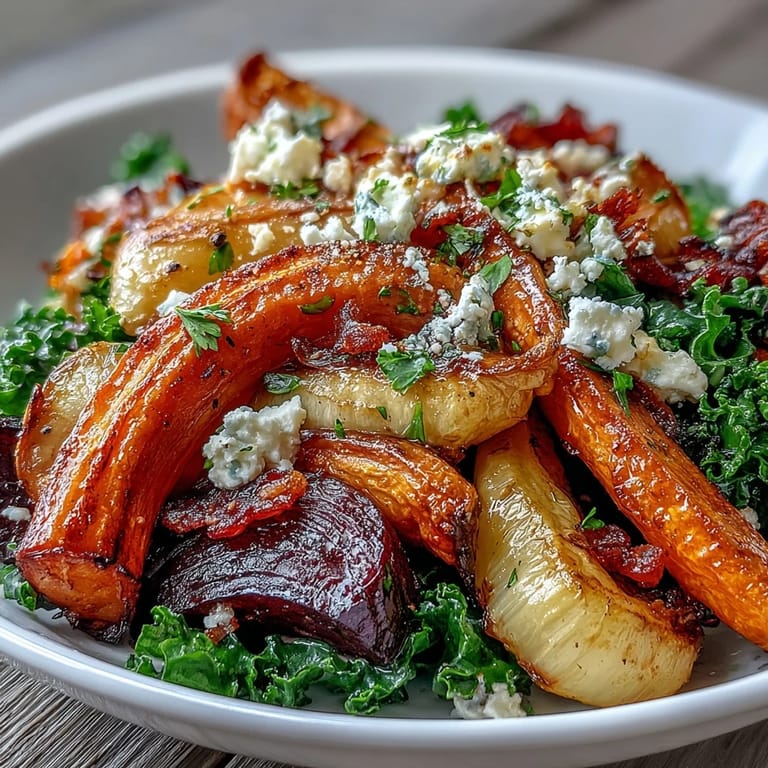
- Divide your massaged kale among four bowls, creating a bed of greens. Top each one with the warm roasted vegetables, being generous with the caramelized edges.
- Dress and finish:
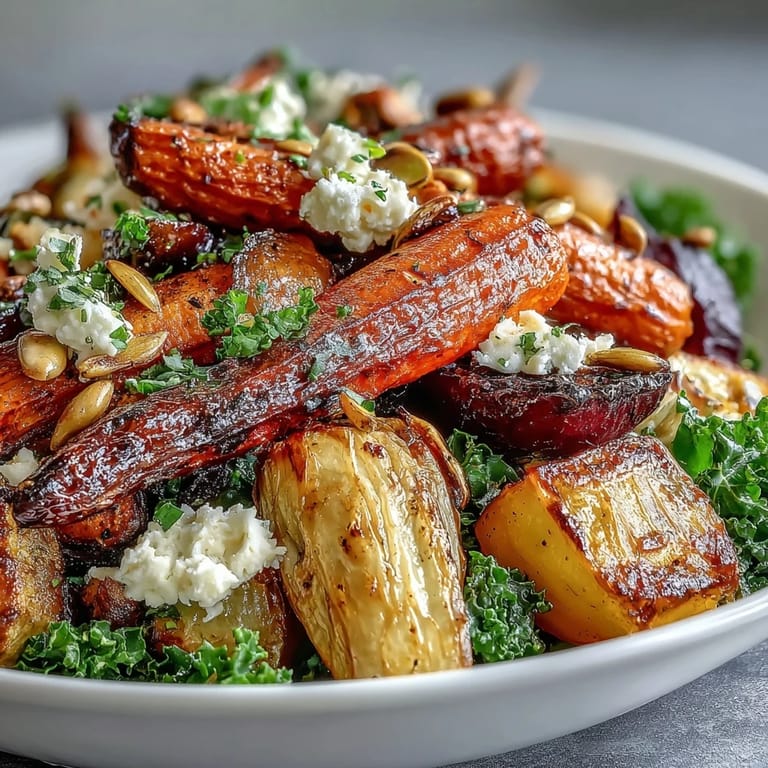
- Drizzle each bowl with the warm dressing, letting it pool slightly around the vegetables. Top with a scatter of toasted pumpkin seeds and crumbled feta, then serve while everything is still warm.
 Save Pin
 My friend Marcus ate this bowl for lunch four days in a row and started talking about it like I'd invented something revolutionary. He's not someone who gets excited about food easily—he's the type who would happily eat the same sandwich every day—but he kept coming back asking if I'd made more. That's when I realized this recipe had moved beyond being just a good winter meal into being the kind of thing that quietly becomes part of someone's regular rotation, the bowl they crave when the days are short and their soul needs warming from the inside.
Why Winter Vegetables Matter
There's something about roasted root vegetables that summer produce just can't touch—maybe it's their density, their natural sugars, or the way they transform in heat. When you roast a carrot in July, it's fine. When you roast one in December, it becomes something that tastes like the season itself, like caramel and earth and the promise that warmth still exists somewhere. That's not nostalgia talking; it's chemistry and seasonality having a conversation.
Making This Bowl Your Own
The beauty of this recipe is that it's a template more than a strict formula—I've made it with parsnips swapped for radishes, added roasted chickpeas for extra protein, even threw in some roasted mushrooms when I had them on hand. The core idea—roasted vegetables, massaged greens, warm dressing—stays the same, but the specifics bend to whatever you have and whatever you're craving. One winter I made it with baby spinach instead of kale, and honestly, it was just as good, maybe even better because the spinach wilted more dramatically in the warmth.
Timing and Temperature Thoughts
The 425-degree oven temperature is specific because it's hot enough to caramelize the vegetables' outside surfaces while keeping their insides creamy and tender. Too low and they'll just steam in their own moisture; too high and you'll burn the edges before the center catches up. The whole process takes about 55 minutes from start to sitting down, which means you can actually have dinner on the table before you've changed out of your work clothes.
- Stir your vegetables at the 15-minute mark and again at 30 minutes if you're nervous about even cooking.
- The vegetables are done when they're fork-tender and the edges have deepened in color to almost caramel brown.
- If your oven runs hot or cold, adjust accordingly—every oven is a little different, and yours might finish in 28 minutes or need 38.
 Save Pin
 This bowl has become my go-to when I need to feed people something that looks like I've spent all day cooking but requires barely an hour of my time and attention. It's the kind of recipe that reminds you why winter exists.
Recipe Help & FAQs
- → What vegetables work best for roasting?
Carrots, parsnips, sweet potatoes, and beets are ideal choices because they hold their shape well during roasting and develop natural sweetness as they caramelize in the oven.
- → Why massage the kale?
Massaging kale with olive oil and salt breaks down the tough cellulose structure, making the leaves more tender and less bitter while improving their texture for eating raw in bowls.
- → Can I make this ahead?
Roasted vegetables keep well for 3-4 days when refrigerated in airtight containers. Store the dressing separately and warm gently before serving to maintain the best texture and flavor.
- → How do I adjust for different oven temperatures?
At 425°F, vegetables roast in about 30-35 minutes. Lower temperatures require longer cooking time—around 40-45 minutes at 400°F—while higher temperatures may reduce time but risk burning the exterior before interiors are tender.
- → What can I use instead of feta?
For a dairy-free option, try crumbled firm tofu marinated in lemon juice and salt, or simply add avocado slices for creaminess. Nutritional yeast also provides a savory, cheese-like flavor element.
- → Is this suitable for meal prep?
Yes, all components store beautifully separately. Prepare vegetables and dressing in advance, then assemble bowls fresh throughout the week. The flavors often improve after a day as ingredients meld together.