 Save Pin
 There's something almost meditative about Sunday meal prep—the way the kitchen fills with the smell of caramelizing root vegetables while you're standing there, hands dusted with quinoa flour, realizing you've actually created something that'll nourish you through the whole week. This bowl came together one chilly autumn afternoon when I was tired of eating the same things on repeat and decided to just roast whatever colorful vegetables were wilting in my crisper drawer. The tahini sauce was an afterthought, honestly—just something I whisked up to make it feel less boring—but it became the whole reason I keep making this now.
I made this for a friend who'd just started eating vegetarian, and she texted me later saying she'd made it three times that week—that kind of validation made me realize this wasn't just a bowl of vegetables, it was actually something special. Watching her plate it up with those little seeds on top, the colors absolutely glowing under the kitchen light, I understood why comfort food doesn't always have to come from tradition; sometimes it comes from paying attention to what tastes good and what makes you feel grounded.
Ingredients
- Carrots: They sweeten beautifully when roasted and their natural sugars caramelize into these little golden edges—cut them evenly so they finish at the same time.
- Beets: These add earthiness and that stunning jewel-tone color; don't skip peeling them raw or your hands will be stained for days.
- Turnips: Often overlooked, but they get creamy and mild when roasted, balancing out the sweeter vegetables.
- Parsnips: The secret weapon here—they turn nutty and tender, adding complexity that makes people ask what that ingredient is.
- Olive oil: High-quality matters here since it's doing the work of caramelizing; use something you actually like the taste of.
- Sea salt and black pepper: Season generously before roasting—the heat intensifies flavors, so don't be shy.
- Dried thyme or rosemary: Optional but worthwhile; they whisper into the vegetables without overpowering them.
- Quinoa: Rinsed thoroughly to remove bitterness, it becomes fluffy and provides the protein backbone that makes this a complete meal.
- Water or vegetable broth: Broth adds subtle flavor that plain water can't match.
- Tahini: The soul of the sauce—creamy, nutty, and it needs the acid of lemon juice to really shine.
- Lemon juice: Fresh lemon, always; it's what keeps the tahini from tasting one-note and heavy.
- Garlic: Just one clove so it doesn't dominate, but enough to wake up your palate between bites.
- Maple syrup or honey: A tiny bit rounds out the tahini sauce with subtle sweetness that makes everything taste intentional.
- Fresh parsley: Bright and clean, it's the finishing touch that says you actually care.
- Pumpkin or sunflower seeds: Toasted seeds add crunch and a subtle nuttiness that nobody expects but everyone loves.
Tired of Takeout? 🥡
Get 10 meals you can make faster than delivery arrives. Seriously.
One email. No spam. Unsubscribe anytime.
Instructions
- Prep your vegetables with intention:
- Peel everything and cut into roughly 1-inch pieces—they should be uniform enough that a carrot chunk finishes roasting at the same time as a beet chunk. Don't stress about perfection here; rustic is actually better because the irregular edges get crispy.
- Season and toss generously:
- In a big bowl, coat your vegetables with olive oil, sea salt, pepper, and herbs if you're using them. Toss it around until everything glistens—this is where the magic begins, because the oil will help them caramelize instead of just dry out.
- Spread them out on the sheet:
- Roast until golden and tender:
- Spread vegetables in one layer on parchment paper and slide into a 425°F oven for 30 to 35 minutes, stirring halfway through so the ones touching the pan get their chance at the hot spots. You'll know they're done when they're soft inside and have these beautiful caramelized edges—that's where all the sweetness lives.
- Cook your quinoa while vegetables roast:
- Combine rinsed quinoa, water or broth, and salt in a saucepan and bring to a boil, then cover and simmer for 15 minutes. Let it sit covered for 5 minutes after you turn off the heat—this resting time is non-negotiable because it lets the grains finish absorbing liquid and become fluffy instead of mushy.
- Whisk together the tahini sauce:
- In a small bowl, combine tahini, lemon juice, water, minced garlic, salt, and a touch of maple syrup if you want that subtle warmth. Whisk it smooth, then add more water if it's too thick—it should be pourable but still coat the back of a spoon.
- Assemble your bowls with care:
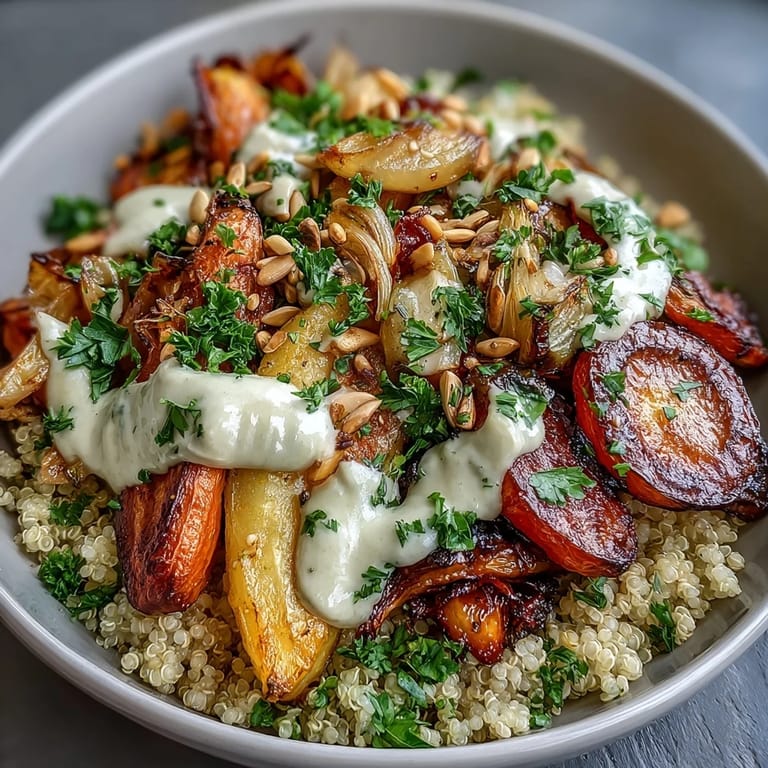
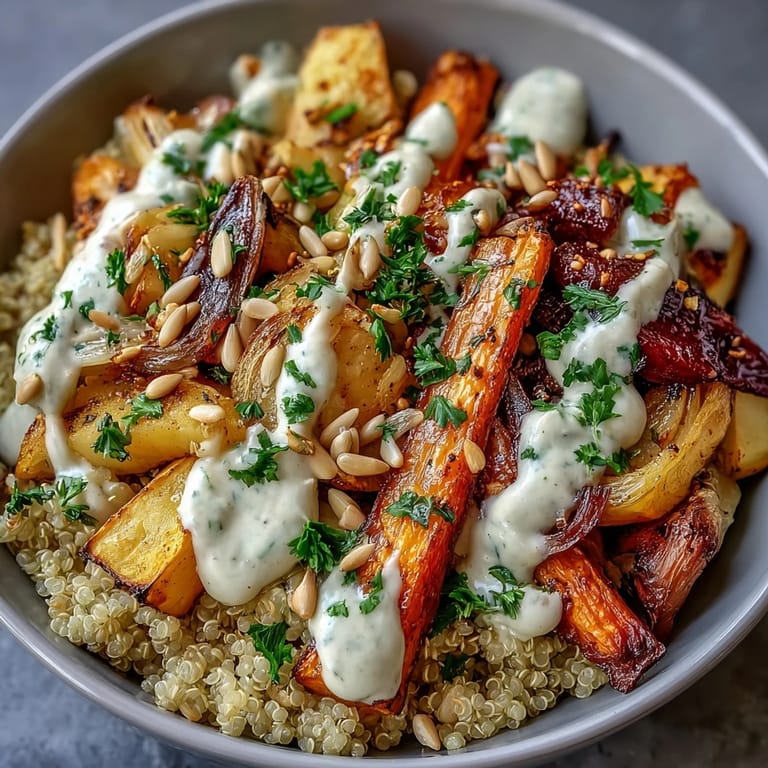
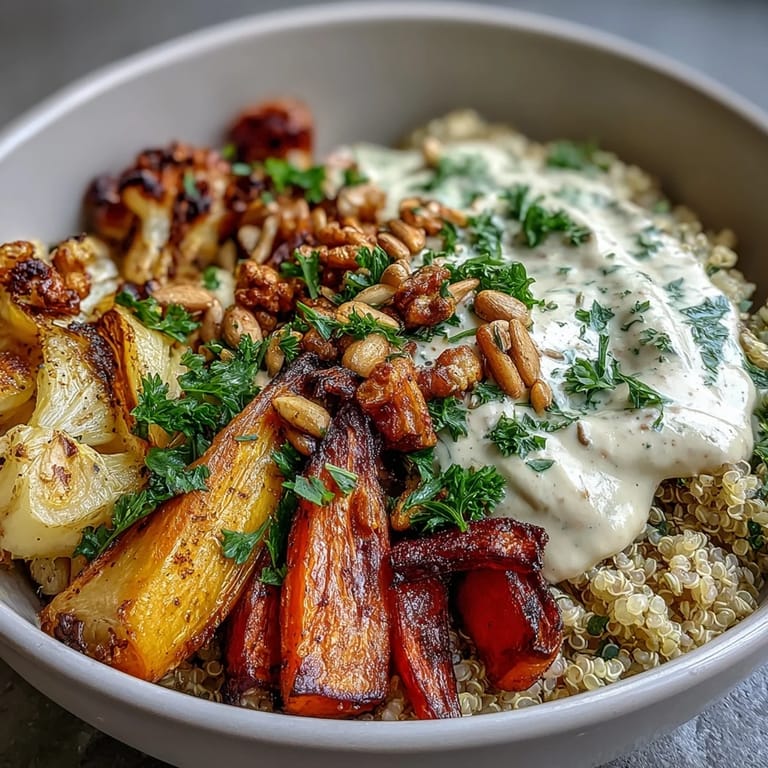
- Divide fluffy quinoa among four bowls, arrange roasted vegetables on top like you're actually plating something beautiful, drizzle the tahini sauce over everything, and finish with a sprinkle of fresh parsley and toasted seeds. Every element matters at this point, and the way the colors and textures layer together is half the appeal.
 Save Pin
 There was this one evening when my partner came home exhausted and I set down this bowl in front of them, and they ate the whole thing without saying much—just quiet, methodical bites with this satisfied expression that made the whole afternoon of prep feel worth it. That's when I realized this recipe had become less about nutrition on paper and more about creating something tangible that says 'I was thinking about you,' and that's the version of cooking that actually matters.
Why Root Vegetables Are Worth Your Time
Root vegetables were always the thing I'd skip in farmer's market bags until someone pointed out that they're basically nature's candy when you roast them right. Carrots, beets, turnips, and parsnips all contain natural sugars that concentrate and caramelize when exposed to high heat, transforming earthy flavors into something almost dessert-like. The texture shift is equally dramatic—that hard, dense raw vegetable becomes creamy and tender, making you forget you're eating something that spent months underground.
The Tahini Sauce Secret
I used to think tahini was just a falafel accomplice, but this creamy sauce changed my entire perspective on what's possible with sesame paste and a few pantry staples. The lemon juice is absolutely critical here—it cuts through the richness and prevents the sauce from feeling heavy or one-dimensional. There's a reason restaurants drizzle tahini over everything; it transforms simple roasted vegetables into something that feels intentional and sophisticated, and honestly, that feeling is half the reason we cook at all.
Making This Meal Work for Your Life
This bowl scales beautifully depending on whether you're cooking for yourself or feeding a small crowd, and it reheats reasonably well if you keep the tahini sauce separate until serving time. The vegetables actually taste better after a day in the fridge when the flavors have had time to settle and deepen. Whether you're prepping Sunday dinner or looking for something that feels special enough for guests but simple enough for a weeknight, this bowl meets you where you are.
- Swap in sweet potatoes, rutabaga, or whatever root vegetables look good at your market—there's no single correct version of this.
- Add chickpeas or a poached egg on top if you want to increase the protein and make it even more satisfying.
- Prepare the tahini sauce ahead and store it in the fridge; it'll last almost a week and transforms any bowl of grains into something memorable.
 Save Pin
 This bowl has become the recipe I make when I want to prove to myself that simple ingredients treated with care can taste genuinely excellent. It's the kind of thing that makes weeknight cooking feel less like a chore and more like a small act of self-kindness.
Recipe Help & FAQs
- → What root vegetables are best for roasting in this bowl?
Carrots, beets, turnips, and parsnips work wonderfully, providing sweetness and earthiness when roasted.
- → Can I substitute quinoa with other grains?
Yes, couscous, rice, or bulgur can be used as alternatives for a similar texture and base.
- → How do I make the tahini sauce creamy without it being too thick?
Whisk tahini with lemon juice, garlic, water, and maple syrup; add water gradually to reach desired consistency.
- → What herbs can enhance the roasted vegetables’ flavor?
Dried thyme or rosemary are excellent options that complement the natural sweetness of the roots.
- → Are there any suggested garnishes for added texture?
Chopped fresh parsley and toasted pumpkin or sunflower seeds add freshness and crunch.
- → Can this bowl be prepared in advance?
Yes, both the roasted vegetables and quinoa can be cooked ahead; assemble with tahini sauce just before serving.