 Save Pin
 There's something about celery root that catches people off guard—it arrives at the farmers market looking like a gnarled, muddy root vegetable, and you wonder if it's worth the effort. Then you taste it in soup, and suddenly it's elegant, refined, almost nutty in a way that makes you feel sophisticated just for spooning it into a bowl. My friend Marcus brought a thermos of this bisque to a winter picnic, and I watched people's faces shift from skeptical to genuinely surprised. That's when I understood: this soup transforms something humble into something that tastes like it belongs in a French restaurant kitchen.
I made this soup for the first time on a gray November afternoon when I was learning to cook more intentionally instead of just heating things up. My kitchen smelled incredible—the butter softening those leeks, the celery root releasing this subtle, almost mineral sweetness as it simmered. By the time I blended it, I felt like I'd actually created something, not just followed instructions. That soup taught me that cooking doesn't have to be complicated to feel meaningful.
Ingredients
- Celery root: This is the star, and don't let its appearance fool you—it's milder and more refined than regular celery, with a subtle earthiness that becomes creamy when blended.
- Yukon Gold potato: Use this variety specifically because it breaks down into silky creaminess rather than becoming starchy or gluey.
- Leek: The white and light green parts are sweeter and more delicate than the dark green tops, which can turn bitter when cooked down.
- Vegetable broth: Quality matters here because it's one of the main flavors—a good broth tastes clean and slightly complex, not salty or artificial.
- Heavy cream and milk: The combination gives you richness without overwhelming the subtle celery root flavor, and using both instead of just cream keeps it balanced.
- Unsalted butter: Start with unsalted so you control the salt level completely as you taste and adjust.
- White pepper: It adds a gentle warmth without the visible specks of black pepper, keeping the soup's elegant appearance intact.
Tired of Takeout? 🥡
Get 10 meals you can make faster than delivery arrives. Seriously.
One email. No spam. Unsubscribe anytime.
Instructions
- Start with softened aromatics:
- Melt butter over medium heat and add your leek, onion, and garlic. You're not looking for color here—just softness and fragrance, which takes about 5 minutes. This slow start builds a flavor foundation that makes the whole soup taste deeper and more intentional.
- Build the vegetable base:
- Add the diced celery root and potato, then sauté for 3 more minutes until they're slightly softened at the edges. You'll notice the celery root starting to release its aroma—that's when you know it's ready for liquid.
- Simmer until completely tender:
- Pour in your broth, add the bay leaf, bring to a boil, then drop the heat and cover. Simmer for 25 minutes or until you can easily pierce the celery root with a fork—this matters because underscooked pieces won't blend smoothly. Listen for the gentle bubbles under the lid, a quiet reassurance that everything's cooking evenly.
- Blend to silky perfection:
- Remove the bay leaf first, then use an immersion blender right in the pot, working slowly and methodically until there's not even a hint of texture. If you prefer, work in batches with a countertop blender, but be careful with hot liquid and always let it cool slightly first.
- Finish with cream and seasoning:
- Stir in milk and cream gently over low heat—this isn't the time to boil away all your work. Taste as you go, adding salt and white pepper until it tastes exactly right to you, which is the most important step of all.
- Serve with intention:
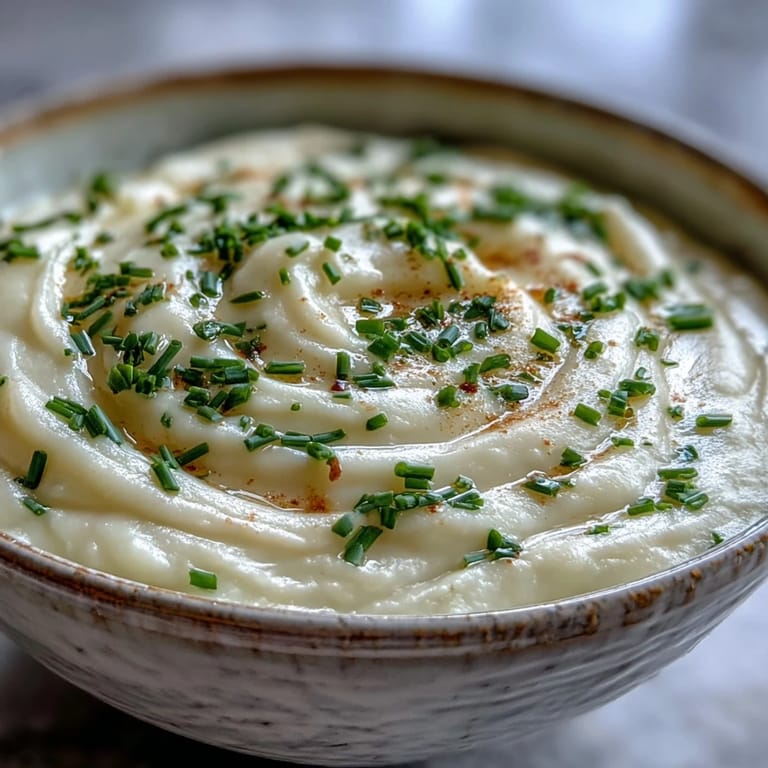
- Warm your bowls first if you can, ladle the soup carefully, then add your garnish and cream drizzle. The warmth of the bowl keeps everything at the perfect temperature longer, and the chives add a fresh brightness that cuts through the richness.
 Save Pin
 The moment I understood this recipe's real gift was when my neighbor came over unexpectedly, and I had a pot of this soup ready to share. Something shifts when you can offer someone something warm and silky and surprising on a cold day, without it feeling like a big production. That's when food becomes more than nutrition—it becomes a quiet way of saying you're glad they're here.
The Secret to Silky Texture
The difference between a bisque that feels luxurious and one that feels one-dimensional comes down to blending technique and timing. Don't rush the blending—if you're using an immersion blender, work in slow, deliberate strokes, making sure you're reaching every corner of the pot where lumps might hide. Temperature matters too; letting the soup cool just slightly before blending (if you're using a countertop blender) prevents the hot liquid from creating steam that can break your blender seal or burn your hands.
Why White Pepper Changes Everything
When I first made this, I used black pepper out of habit and realized it created little dark flecks that interrupted the visual elegance of the pale, creamy soup. White pepper dissolves into the liquid more completely and adds a subtle warmth without the visual distraction—it's one of those small details that makes something look restaurant-quality. It also has a slightly different flavor profile that works particularly well with the delicate earthiness of celery root, feeling more refined and less aggressive than its darker cousin.
Variations and Extensions
Once you master this bisque, you'll find yourself wanting to play with it. Some days I add a splash of crisp white wine after sautéing the vegetables, and it brings an acidity that brightens everything. Other times I've infused the broth with thyme or added a tiny pinch of nutmeg, though with restraint—celery root deserves to be the main character. For a vegan version, swap the butter for good olive oil and use plant-based milk and cream, and honestly, you won't miss anything.
- Try a touch of dry white wine poured in after the initial sauté for subtle sophistication.
- A whisper of fresh thyme during the simmer adds an herbaceous note without overshadowing the celery root.
- Serve alongside crusty bread that you've rubbed with garlic, because this soup deserves something to soak up every last spoonful.
 Save Pin
 This bisque is proof that the most elegant meals often come from simple ingredients treated with care and attention. Every time you make it, you're practicing the language of cooking—learning what textures feel right, what flavors balance each other, and how to turn something earthy into something that tastes like comfort and sophistication at the same time.
Recipe Help & FAQs
- → Can I make this bisque ahead of time?
Yes, this bisque stores beautifully. Prepare it up to 3 days in advance and refrigerate in an airtight container. Reheat gently over low heat, stirring occasionally. You may need to add a splash of broth or milk to adjust consistency.
- → What can I substitute for celery root?
While celery root provides a unique subtle flavor, you can substitute with cauliflower, parsnips, or turnips for a similar creamy texture. Keep in mind the flavor profile will change, but the soup will still be delicious.
- → How do I make this bisque vegan?
Simply replace the butter with olive oil, use unsweetened plant-based milk (oat or cashew work wonderfully), and substitute the heavy cream with coconut cream or cashew cream for that rich, velvety texture.
- → Why is my bisque not smooth enough?
Ensure the vegetables are completely tender before blending. Blend thoroughly for at least 2-3 minutes with an immersion blender. For the silkiest texture, strain the soup through a fine-mesh sieve after blending.
- → Can I freeze celery root bisque?
Yes, this bisque freezes well for up to 3 months. Cool completely before freezing in airtight containers, leaving some headspace for expansion. Thaw overnight in the refrigerator and reheat gently, whisking to restore smooth consistency.
- → What wine pairs best with this bisque?
A crisp, mineral-driven white wine like Chablis, Sancerre, or Pinot Grigio complements the delicate flavors beautifully. The wine's acidity cuts through the richness while enhancing the subtle earthy notes of the celery root.